Tuesday, March 10, 2015

Play

Play is an interesting and an important part of childhood and of the development of the mind. It is also a combination of previous ideas and themes of childhood which we have discussed such as adventure and imagination. Play is also a means to help facilitate the development of various skills. For example, the board game 'Battle Ship' teaches deductive reasoning, strategy, and reading people. These are skills which can be helpful in everyday application and for the future. This was one of the games I played last week and I felt slightly like I was making a business deal. We were both fishing for something by asking questions and seeing the response. It was interesting for me to observe my strategy of play. At first, I tried to set up my ships so that they would be hard to guess their location. I ended up setting them up fairly evenly spaced, which later is not necessarily the best idea since this is what people typically do. This reasoning, of this being a common strategy, contributed to my finding Marritt's last ship. Her ships were fairly evenly spaced and by looking at the board I could deduce the location of her next ship because I knew it would be vertical since I had uncovered 3 horizontal ships and only 1 vertical ship. So, to make it even she would have done a vertical ship. From here I figured she would also space the vertical ship away from the other vertical ship. I also figured that she would leave at least 1 open row in-between any other ships. By taking these into account my first guess for her ship last was - bingo - right. In battle ship people try to have random placements of their ships but their random isn't truly random because it is evenly spaced. This game was really interesting for me to play since it really reminded me of some of the valuable reasoning skills which games can teach you.


The next board game I played was 'Twister'. I've always liked this game because it was generally easy for me to do well since flexibility and balance are things I commonly practice as a dancer. However, the game was a new experience this time because it had been re-imagined a bit. In this version, the board could tell you to take feet and hands off the board and the spinner could also choose a move for you if the spin board landed on a certain symbol. This made the game much harder and one would need to be more of a gymnast since standing on one's hands or hand with one's feet in the air was now an option in the game. I felt like this re-mix of the game really made it more intriguing because it made is much more physically challenging. Also, it was interesting in our discussion afterwards on how Twister has been seen as obscene. I do think this comment is relevant to this game because it definitely can get awkward when you get tied up in knots with other people. However, this awkwardness would probably only be apparent to older kids. So, Twister is an example of how a game could change tones over time.


The tool box video game was very interesting because it allows the play of action figures in the virtual world. It is an extension of the action figure since one places the action figure on the consol. Also, I liked the freedom of finding an objective in the game. I think this gave the game more value since the play is constructed by the player not by the game maker. I think this type of play, the player creating the game, is a more creative and engaging play process. The most engaging games are the ones in which you create the adventure yourself. This contrasts with the first video game we played which had a specific objective. This video game to me was pointless and boring because I felt like it didn't engage the mind or the player's creativity enough, but was busy work.

Overall, the construction and execution of play is a typical part of child's media. I also think that the construction of play by the children themselves allows more creativity to be developed. The constructed games may teach very specific skills, like battle ship does, but by developing the game the player is exploring more into what they want to develop.

Tuesday, March 3, 2015

Finding Hope with Imagination and Neverland


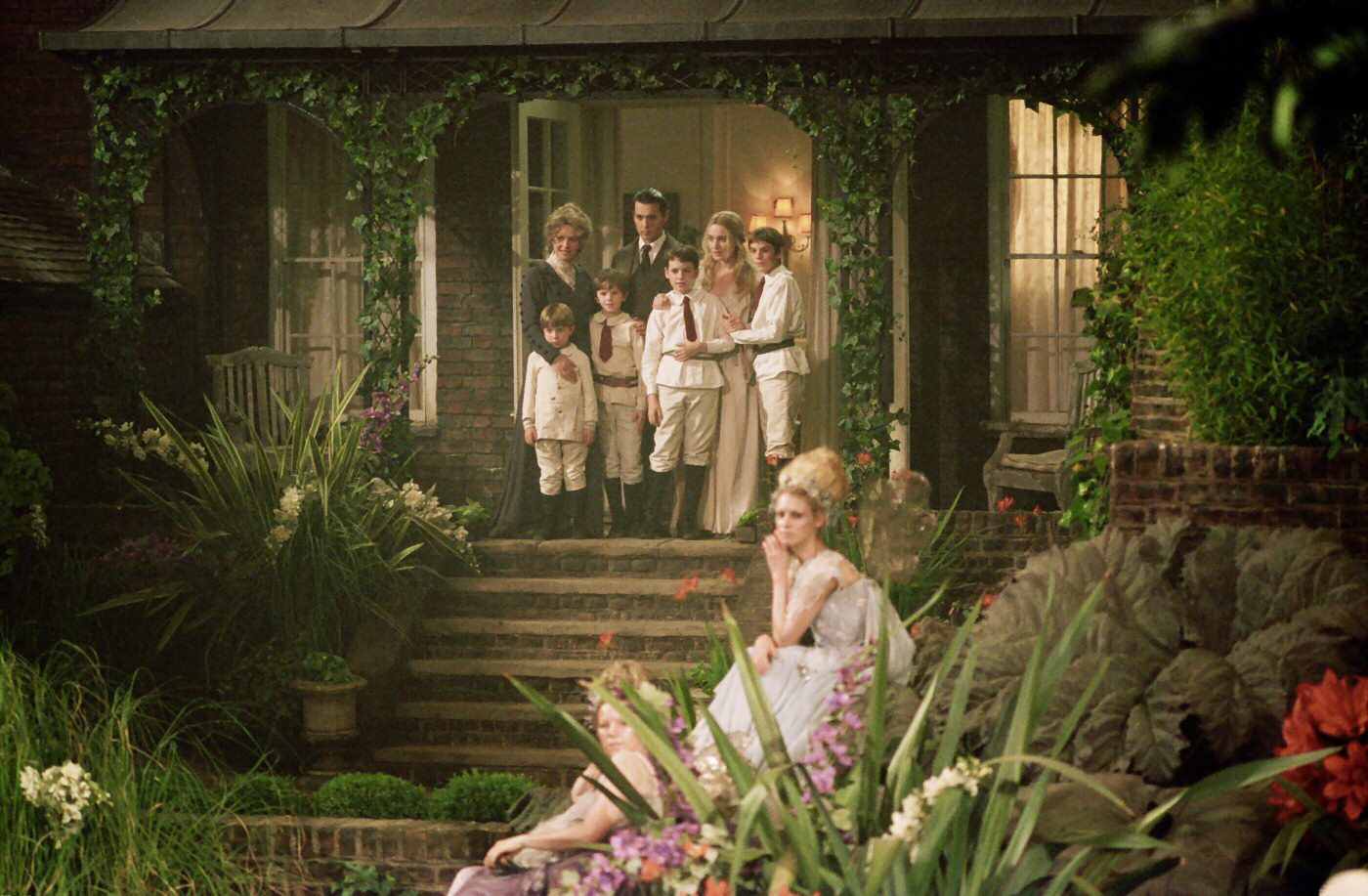
The film Finding Neverland explores the wonders of using one’s imagination to see the world in a new light. The main character Sir James Matthew Barrie lives in another world in his head which is full of his imagination, hopes, and dreams and is the manner in which he interprets the world. This world manifests itself in his play ‘Peter Pan’ and the make-believe world of Neverland. The film does a great job of illustrating how Barrie sees the world through his imagination. The film makers demonstrate his minds eye through the manner in which they shoot and present the film. For example, the filmmakers introduce Barrie’s unique take on interpreting the world in his minds eye at the being of the film. When Barrie’s film is not being received well by the audience he glances out through a curtain into the theatre and imagines a thunderstorm erupting upon the audience. In this visualization the audience realizes that Barrie sees his play as a failure and that he has washed out.

As the film continues we see an example of Barrie inviting others into his imagination. This occurs when Barrie encounters a young family of four boys and their widowed mother. When he meets them they are busy having grand adventures with the great prince George. Well, all the boys but young Peter. However, when Barrie joins in on the game by presenting his fantastical tricks with a great bear (Barrie's dog Porthos) little Peter, points out that Porthos is "just a dog" and that the whole thing is "Absurd!". Barrie turns around and has this exchange with young Peter:

Barrie: Just a dog! Just! Porthos, don’t listen to him. Porthos dreams of being a bear and you want to dash those dreams by saying he’s just a dog. Tisk. Tisk. Tisk.  What a horrible candle snuffing word. That’s like saying he can’t climb that mountain; he’s just a man. Or that’s not a diamond; its juts a rock. Just. 

Peter: Fine then. Turn him into a bear if you can. 

Barrie: With those eyes my bonnie lad, I’m afraid you’d never see it. However, with just a wee bit of imagination I can turn around right now and see the great bear Porthos.

At which point Barrie turns and beings to dance with Porthos. At this point the camera dances around Barrie and cuts back and forth from the physical view of Barrie dancing with his dog and the minds eye view of him dancing with a great bear. We see here that Barrie is inviting this young family into his mind, into his world, and into his imagination.

Watch the scene here:


In this scene, key principles of imagination of Barrie's are introduced and embraced by the little boys except for Peter. Peter is more resistant to the typical young child's world of imagination and it is this resistant which Barrie breaks down over the course of the film. Barrie comes to brings Peter into a world of hope, light, and imagination. And particularly in this scene he outlines the importance which dreams have on the world because they give people hope to have goals (to climb a mountain) and see the world as more beautiful (diamond). It is here that Barrie begins teaching Peter that imagination is a tool which is not just for the young and fool-hardy but for those you aspire to live in a beautiful world of hope.

And this world is really what his land of Neverland embraces. Neverland is drawn upon the world or reality around Barrie which is seen through the cross cutting of the real world and Neverland. And Neverland is the real world infused with Barrie's unique hopefulness. The world of Neverland falters though when people do not hope in it or 'believe' in it. And the sorrows of the world breaks down peoples' hope. 

This breaking of hope is seen primarily in Peter who pulls himself from the world of Neverland when his mother becomes deathly ill. When this happens Peter feels obligated to return to 'reality' because he feels dreams can't come true. However, Barrie tries to invite him and the rest of his family back into the world of hope by bringing Neverland and belief into their home with his play 'Peter Pan'. And through the character of TinkerBell who's life is the embodiment of belief and hope.


However, for Peter, Tinkerbell's pleas are not enough to keep him dreaming and believing when his mother passes. At the funeral Barrie teaches Peter that his mother still remains with him as long as he keeps hope and belief in his heart.


Therefore, the Neverland is the embodiment of belief and hope which helps one dream and imagine a greater world. It is through imagination that allows us to dream of a world greater than we know and thus helps us make this world a reality. And hopes and dreams are generally associated with the young because they have not been crushed from the realities of the world. However, this film teaches that if you believe through the sorrow and heartache you can maintain a childlike outlook on life and be able to imagine a fantastical world around you.

The Wizard of Oz - Experimentation


Frank Baum’s book The Wonderful Wizard of Oz (1900) strived to be a different type of fairy tale than what had previously been written. Baum explains his experimentation of children’s fair tales in his writing The Wonderful Wizard of Oz in the introduction of the book. In the introduction Baum explains that fairy tales have long followed children through the ages, but that he felt it was time for a new type of tale for children in “wonder tales”. In the introduction he explained: 

“Yet the old time fairy tale, having served for generations, may now be classed as "historical" in the children's library; for the time has come for a series of newer "wonder tales" in which the stereotyped genie, dwarf and fairy are eliminated, together with all the horrible and blood-curdling incidents devised by their authors to point a fearsome moral to each tale. Modern education includes morality; therefore the modern child seeks only entertainment in its wonder tales and gladly dispenses with all disagreeable incident.”

Therefore, Baum set out to write a “wonder tale” to be a modern fairy tale for the modern children who sought entertainment and imagination and who didn’t need a moral lesson. 


Instead of teaching a moral lesson or a warning on behavior like many fairy tales sought to do The Wonderful Wizard of Oz teaches life principles. In particular the tale teaches the importance and significance of three virtues. These virtues are the importance of brains or intelligence, of having a heart, and of having courage. These virtues are embodied by Dorothy's three comrades on her adventure through the land of Oz. The Scarecrow is seeking for brains, the Tin-man is seeking to regain a heart, and the Cowardly Lion is seeking for courage. Throughout the tale is is shown that it of these characters possess these traits which they so dearly yearn for. For example, on the way to land of the Wicked Witch of the West the Scarecrow demonstrates great wisdom in devising the plans to conquer both the black crows and the swarm of bees. The Scarecrow is quite the problem solver and it is his lack of knowledge and experience which makes him feel he is a fool. The Wizard of Oz later gives him a “new bran of brains” which really consisted of changing out the straw in his head for bran and needles (needles to show he is sharp). The wizard didn’t ‘really’ give him brains but gave him a placebo to feel like he had a brain to better store his knowledge and experience. The lesson here though is that the Scarecrow had intelligence all along and that he would only continue to get smarter since as the Wizard advised one gets smarter the longer one lives and experiences life. 

Each of these three virtues which the Scarecrow, Tin-man, and Lion strive for are things which do not manifest themselves physically but they each wanted a physical display of the characteristic. The Wizard contemplates how it was easy for him to give them what they wanted since it wasn’t possible to give them what they really wanted but it also wasn’t necessary since they already possessed within themselves. They just felt like they needed something tangible to manifest it to themselves and others. The Scarecrow already smart, the Tin-man was already loving and caring, and the Lion was already brave but like the lion they just needed to realize that the things like courage comes from ‘confidence’ which exist from within. So, the Wizard just gave them placebos to help them gain confidence in themselves and their talents which they had been developing. 
It is a different type of tale too, in the fact, that Baum continues the story with the Scarecrow, Tin-man, and Lion even after they gain/realize their desires. Baum didn’t have to keep the characters around as Dorothy continued on her quest to find her way home but he did. And in so doing we see the characters further develop the attributes they had gained through out the first portion of the books. By doing this Baum is teaching that talents must be maintained and developed to continue to posses them. This part of the plot has the story seem to continue farther than what most fairy tales tend to do, making this tale even more unique in comparison to other children’s tales of the time and previously. 

Overall, the book The Wizard of Oz is a new type of fairy tale in being a ‘wonder tale’ of entertainment and life lessons being taught in a non-didactic manner. There are some elements of fairytales still present such as the battle between good and bad and magical creatures, however, the stereotypical characters are done away with and the driving moral messages are also not present. The book really is an example of a new type of tale for children which strives to bring 'wonder' to their lives. 


Tuesday, February 24, 2015

Imagination


Imagination is a talent in which children are generally regarded as natural masters. Children typically explore the world through games of their playtime in which they imagine new worlds or this world in a new way. An example of this idea of children exploring through their imagination is shown in the film Alice, directed by Jan Svankmajer. The story is inspired by Lewis Carroll's Alice in Wonderland and Alice through the looking glass, however, the manner in which Svankmajer decides to tell the story demonstrates that Svankmajer is letting the audience know that the story is only in Alice’s head not reality and that is making it up during her play time in her room. Svankmajer demonstrates that the story is her playtime by relating that Alice is the writer of the story. Svankmajer shows that Alice is the writer since she is the one delivering all the dialogue. Also, all the characters and most of the props can be found around Alice’s room and are the toys in which she creates her settings. Also, the sets themselves are all made out of the same wood of Alice’s room and look like strongly as her room. This re-iterates Svankmajer perspective that this is all happening in Alice’s room as she plays and that she is creating the settings herself in her room with her materials and not just in her imagination. I feel that most children would imagine more into their created worlds such as color or fantastical landscapes. These two elements are generally strong elements in other renderings of Alice in Wonderland but are not present her. The film is almost limiting Alice’s imaginings to things she can physically produce herself. Also, this establishes that Alice is not imagining something from scratch but is re-imagining the world around her which she is familiar with but may not fully understand. This exploration of the world around her is also seen through the storyline she creates. The story explores the various English traditions and sentiments such as the constant tradition of tea time, the class system with the queen’s court-who really has control of court the king or the queen?, the need to change to get through life, etc. Overall, Alice is and exploration of a child of the Victorian England through the use of playtime with her toys. However, this story is really created by adults which means it is a representation of what adults remember of their childhood or of what they feel I child might perceive of the adult world. Therefore it is important to note that these imaginations are coming from adult minds who have lived in the political structures of ‘reality’ longer than a child and therefore the political implications would be more conscious than subconscious like a child’s would be. Is it then possible for a child’s imagination to fully be represented in media? I think media such as Kid History portrays a interesting view of a child’s imagination operating in an adult world. In these videos the story originates from the kids but it still is executing by the imagination of the adults. Since, imagination in media is explored through the craft of adults it is a matured imagination. This is probably alright to some extent since all adults were once children. 

Tuesday, February 10, 2015

Documentation

All art (stories, paintings, films, etc.) are in some way a sort of documentation in that they are documenting ideas and cultures which relate to the circumstances in which they were made and relate to the audience to which they were made for. They may not be striving to necessarily ‘document’ something but they are. For example, the short story Vanka by Anton Chekhov may not have been striving to document what life was like for a working class boy in 1886 Moscow, Russia or what life was like in a small Russian village but the story does this. This character, Vanka, is technically fictitious, but Vanka can be seen to represent a certain lifestyle of the time. Therefore, the story is a documentation of the culture of how a young working class boy’s life might of been and gives some insight to how the situation of orphanage was handled then as well. 

Another example is the Hollos’ children’s book The Story of Your Coat. This story strives to teach the process of a coat being made and the culture of the time of 1946 is also recorded through the piece. Since this story strives to teach a potential inquiry of a child it could be categorized under as purely education, however, the piece is also documenting a historical process whether it really intended to or not. 


An example of a film which documents a particular culture and era is the  Chinese drama Not One Less (1999). This film captures the educational environment which existed in rural China and contrasts rural China with urban China. For example, the film captures the problem of rural children dropping out of school at young ages in order to start working and to help provide for their families. When in the city the children which are shown who are city natives always have backpacks and appear to be going or coming from school. In contrast, the children who state that they are from rural villages are always shown as children workers in the city and are shown as very poor. Through this the film is expressing that children raised in the city are wealthier and go to school longer while rural children drop out of school and come to the city to work. The film is capturing society, cultural practices, class systems, and economic circumstances of the time through characters and through the story in its entirety. Another specific economic circumstances which the film documents are the specific prices on train tickets, chalk, and the some different employment salaries such as the salary of a substitute teacher for a month, a brick mover, and a laundry girl). Overall, the film captures culture, society, educational, and economic circumstances of specifically rural China and partially of urban China in the 1990s and partially of urban China and therefore is a type of documentation of China in the 1990s. 

Tuesday, February 3, 2015

Morals in Mary Poppins

The film Marry Poppins (1964) addresses several life lessons to the children taught by Mary Poppins. For example, when she teaches the children the importance of work when getting the children to clean the nursery she states: “ In every job that must be done, there is an element of fun. You find the fun and snap, the job’s a game!” Here, Mary Poppins is teaching that in every ‘job’ every responsibility of work there is a positive side which can be taken one just has to find that light and work with it.

Another lesson Mary Poppins teaches is to accept one’s consequences. She teaches this when she is giving the children their medicine after they have been caught in the rain. She states: “People who get their feet wet must learn to take their medicine.” Here, she is teaching that one has to accepts the consequences in life for the actions that they make and the actions upon them. They did not mean to get caught in the rain but they did and thus they have to accept the consequences of that.

Another principle taught in the film is the acceptance of people regardless of their class. England is a very class oriented society and that is seen within the characters. However, the acceptance which Mary Poppins has for Bert teaches that the views of even a lonely street artist are important and have weight to be heard. Also, the mother’s involvement in women’s rights provides an interesting commentary on social class. The film takes place in 1910 and shows the work of protestors including the mother as they fight for women’s rights. Having the mother be an active part of the women's rights movement portrays women in a positive light and promote equality between men and women.

Another theme of the story is family. The whole arch of the story, is that of the family being brought together emotionally. The children were feeling neglected by their father at the beginning but the father comes to appreciate their views and insights. This is seen in the seen in which Mr. Banks is fired. In this seen he pulls out the two toppins of his son and realizes his love and devotion is with his family not with the Bank he works for. He then proceeds to spend more time with his family by flying a kite with them.

Overall, the film teaches several life lessons including the importance of family, the importance of accepting ones consequences in life, and the importance of finding joy in the work you do.

Adventures of Pippi Longstocking

The book, Pippi Longstocking by Astrid Ericsson Lindgren, is a spunky adventure tales of Pippi Longstocking and her two friends Annika and Tommy Settergren. Through out the book Pippi experiences new adventures of experiences most would find ‘normal’ these include going to school and attending a coffee party. In these experiences Tommy and Annika are the ones initiating the experience but it is Pippi who, with her unique perspective and assertiveness, who takes things in unexpected ways and makes it quite the hassle for the adults but quite the tale for the other children.

Also, Pippi has several extraordinary adventures while in the town. These adventures seem extraordinary to Annika and Tommy while they seem normal or trivial to Pippi. These include their excursion to the circus where Pippi performs tricks on a horse, a tightrope, and beats the ‘strong’ man of the circus. Quite impressive feats for a 9 year old girl but all in a day’s play for Pippi. However, for Annika and Tommy these adventures are new and exciting. For them, Pippi is a type of mentor who takes them into a new world even though this new world is one they have experienced before but now they are experiencing it with Pippi who provides new perspectives. For example, Pippi gives new excitement to playing in the yard by providing a way for all three to climb into a hollow tree and think it is a dungeon. This experience, in particular, gave Annika new bravery and confidence since Pippi encouraged her to overcome her fear of the tree’s height and other potential dangers.

Some aspects of Pippi’s life make her prone to the adventure as opposed to the just a story of curiosity, which is a definite element but not the entire scope of the stories. Pippi in in a new place, new to her, her father’s old house, Villa Villekulla. She is alone, except for animal friends of her monkey and her horse. She has exceptional strength, wit, and charm. But most importantly she has a determined spirt who isn’t hampered by the seemly impossible such as a raging bull, or a burning house, or the authorities. She is able to adequately take care of herself as she explores this new world to her and the dangers it has. She is also able to help her friends explore the world more and to help them overcome their fears. She helps particularly Annika overcome heights of the tree, and the darkness in the tree trunk, and the potential of ghosts in the attack. All of which are common obstacles to children and are adventures for the common 9 year old. Overall, the book provides adventures on a domestic scale but also provide the extraordinary adventures which Pippi is prone to encounter and conquer.